Enterprises are Eyeing End-To-End AI Gateways
Hacker News
Enterprises are moving beyond simple LLM proxies to unified AI gateways, seeking centralized control over access, costs, compliance, and security as AI adoption expands across departments.
Hacker News
Enterprises are moving beyond simple LLM proxies to unified AI gateways, seeking centralized control over access, costs, compliance, and security as AI adoption expands across departments.


AI 生成摘要
隨著人工智慧在各部門的普及,企業正從簡單的語言模型代理轉向統一的人工智慧閘道,以實現對存取、成本、合規性和安全性的集中管理。
Learn why simple LLM proxies aren't enough and how a unified AI gateway delivers centralized access control, cost visibility, compliance, and security.
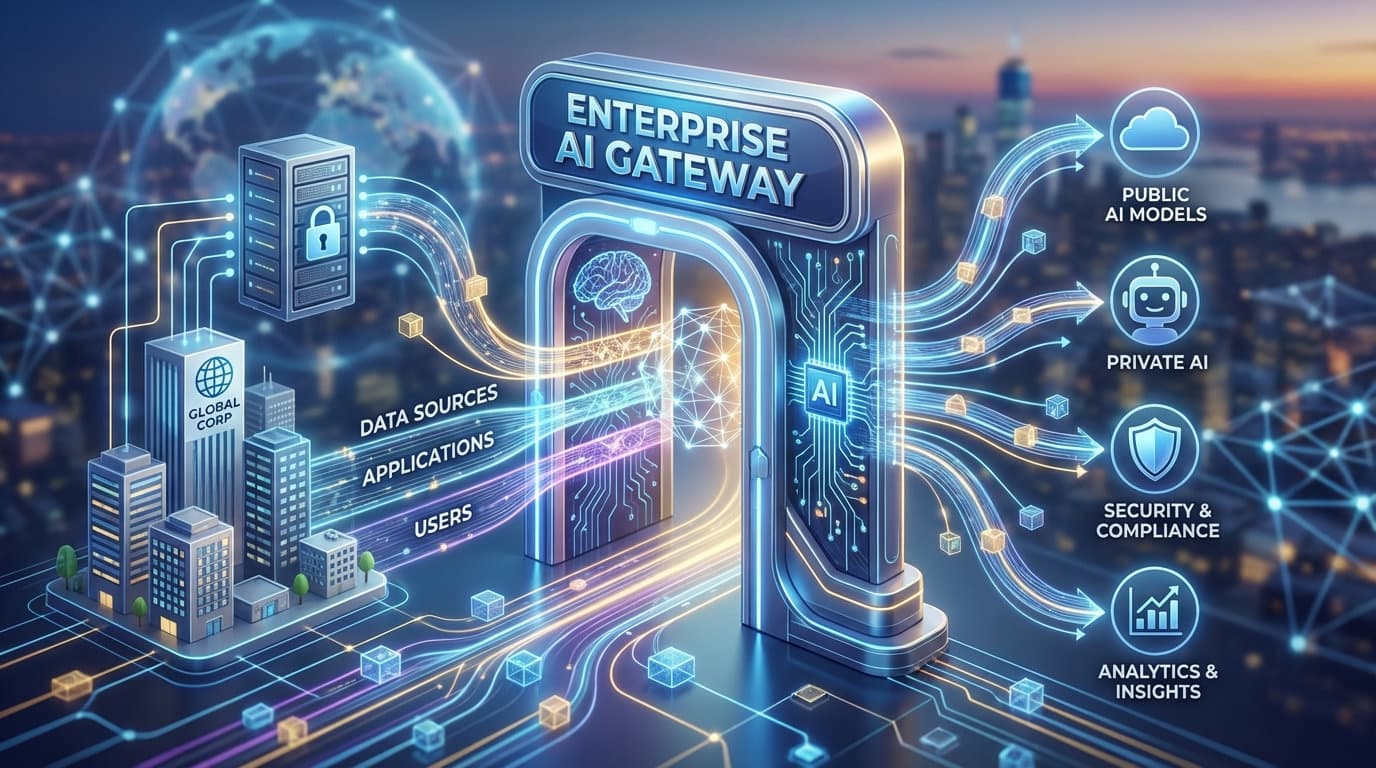
AI is no longer a tech team experiment. It's in customer support, sales, marketing, legal, HR, and finance. Every department now has a use case—and every department is signing up for different tools, using different providers, with no unified oversight.
The result? Shadow AI sprawl, unpredictable costs, and zero visibility into what data is flowing where.
Simple LLM proxies solve part of this: cost tracking and provider routing. They let you switch between OpenAI and Anthropic, monitor spend, and avoid rate limits.
But proxies are point solutions. They don't answer the questions that keep IT and finance leaders up at night:
Enterprises don't need another tool to manage. They need a single platform that handles AI access, security, cost management, and compliance in one place.
One platform where every employee—from the marketing intern to the CFO—gets appropriate AI access. Role-based permissions (Owner, Admin, Developer) that map to how teams actually work. No more scattered API keys or untracked ChatGPT Plus subscriptions.
Real-time spend broken down by team, project, and individual. Set budgets, get alerts, and enable internal chargebacks. One company reduced their AI spend by 40% simply by seeing which teams were over-prompting.
Every AI interaction logged—who prompted what, when, which model, and what it cost. When the auditor asks "what data touched AI systems last quarter?", you have the answer in seconds.
Multi-provider routing means you're never locked into one vendor. When OpenAI has latency issues, requests automatically route to Anthropic or Google. Smart routing optimizes for cost, speed, or reliability based on your priorities.
This is where self-hosting becomes critical. A gateway deployed in your own infrastructure means prompts containing customer PII, contracts, and internal strategy never leave your network. You control data retention. Provider API keys stay in your systems. Compliance audits become straightforward: here's the server, here's the data, here's who accessed it.
For a 200-person company spending $15K/month on AI:
The gap between "let's try ChatGPT" and "AI is critical infrastructure" is smaller than you think. Modern AI gateways like LLM Gateway deploy via Docker, integrate with existing identity providers, and offer OpenAI-compatible APIs that work with your current tools.
The question isn't whether to standardize AI access. It's whether you'll do it before the next security incident or budget surprise forces your hand.
For enterprises, the future of AI isn't about choosing the right model. It's about controlling how AI flows through your organization—securely, accountably, and on your own terms.
Ready to take control of your organization's AI? Get started with LLM Gateway
© 2026 LLM Gateway. All rights reserved.