Luminar sale approved despite last-minute mystery bid | TechCrunch


Topics
Latest
AI
Amazon
Apps
Biotech & Health
Climate
Cloud Computing
Commerce
Crypto
Enterprise
EVs
Fintech
Fundraising
Gadgets
Gaming
Google
Government & Policy
Hardware
Instagram
Layoffs
Media & Entertainment
Meta
Microsoft
Privacy
Robotics
Security
Social
Space
Startups
TikTok
Transportation
Venture
More from TechCrunch
Staff
Events
Startup Battlefield
StrictlyVC
Newsletters
Podcasts
Videos
Partner Content
TechCrunch Brand Studio
Crunchboard
Contact Us
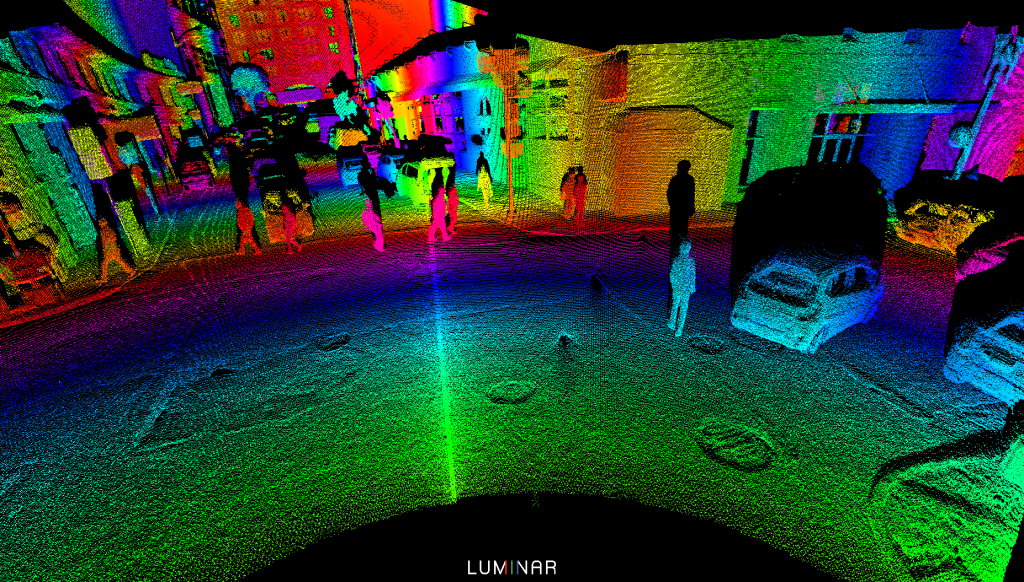
Luminar sale approved despite last-minute mystery bid
Moments before a bankruptcy judge was expected to approve the sale of Luminar’s lidar business, an unidentified party submitted an offer that apparently blew away the leading bid of $33 million.
This bid, which emerged just before a hearing Tuesday, kicked off a series of rapid-fire meetings between Luminar’s remaining leadership team and its lawyers, a “special transaction committee” formed to navigate the bankruptcy, and eventually the company’s full board.
While the bid was “substantially higher,” there were “infirmities” in the offer, according to a lawyer for Luminar. Luminar ultimately decided to stick with the $33 million bid it received from a company called MicroVision during an auction on Monday.
The identity of who submitted this long-shot offer was not revealed, but Luminar’s lawyer said it was an “insider purchaser,” meaning it likely came from company founder Austin Russell.
Russell had already tried to buy the company late last year before it slid into bankruptcy (and after he abruptly resigned as CEO). Representatives of his new firm Russell AI Labs previously told TechCrunch he was interested in submitting a bid on the lidar business during the bankruptcy case. (Those same representatives did not respond to a request for comment Wednesday.)
The hearing moved forward, and the sale to MicroVision was approved. The sale of Luminar’s semiconductor division to a company called Quantum Computing Inc. was also approved.
The transactions are likely to close in the coming weeks, and after that, the company will cease to exist, bringing an end to one of the buzzier suppliers of the budding autonomous vehicle era.
Disrupt 2026 Tickets: One-time offer
Disrupt 2026 Tickets: One-time offer
What MicroVision wants
Russell’s goal of using lidar to help cars drive themselves will continue on at MicroVision, though, according to its CEO Glen DeVos. As part of the asset sale, MicroVision will get Luminar’s lidar tech as well as its remaining staff, and he said he’s hopeful some of the other talent that was laid off prior to bankruptcy will come on board, too.
For DeVos, Luminar’s lidar technology is the piece MicroVision has been missing from his company’s portfolio. The Redmond, Washington-based company doesn’t have the same profile as the leaders in the lidar sector like Aeva, Innoviz, Hesai, or Ouster, but that’s in part because it lacked the long-range sensing capability that is crucial to automotive.
MicroVision has a “very strong” software team, DeVos said in an interview with TechCrunch, and similarly strong short-range lidar team. But DeVos, who spent a long career at automotive suppliers Delphi and Aptiv, and took over as MicroVision CEO last year, wants to expand beyond its current markets of industrial use, security, and defense.
“So when we look at the Luminar engineering team, and what they’ve done, we said: ‘Hey, that’s a great compliment from a from a engineering capability standpoint,’” Devos said. “That’s critical in this area in terms of trying to win automotive business.”
DeVos said he’s hopeful that MicroVision can take Luminar’s existing commercial engagements with automakers — even the ones in tatters, like the contract with Volvo — and use those as a springboard into automotive, which would represent a huge new pool of potential revenue for his company.
“I’ve been in the automotive industry a long time. I have experience where contractual relationships have gone off the rails, and basically, worked very hard to put those back together. We’re going to look at every single one of those. We’re not going to assume any of them are beyond saving,” he said. “You never want to get there, but, you know, there’s ways of putting those pieces back together.”
A second mystery bidder?
While the sale approval is behind him, Tuesday’s offer wasn’t the first time DeVos and MicroVision found themselves up against a mysterious bidder.
During the hearing, lawyers for Luminar and Rich Morgner, a managing director at Jeffries (which was helping run the sale process) revealed that another unidentified party was forming a bid as far back as January 12.
That bid was problematic from the jump, Morgner said. At first, the party’s financing was coming from a “Chinese national company.” When Luminar expressed concerns about regulatory approval, Morgner said the bidder replaced its funding with three different non-Chinese sources.
“One was family money, which we were ultimately able to verify. The second was an SPV under the Caymans, which had a brokerage statement showing a round number of funds. And then we also had a European family office that was also part of the financing syndicate,” he said.
While the lawyers and bankers were able to verify the “family money” was dependable, Morgner said the large round number in the Caymans SPV seemed suspicious.
“The concern was the money came in… [so] money could come out. It wasn’t like looking at a long, dated brokerage statement, where you could see the ebbs and flows in the various different securities,” he said. Proof of funds from the European family office source was also never provided.
Luminar’s lawyers never revealed the identity of the bidder, or whether it was the same party that submitted the offer that disrupted Tuesday’s hearing.
Topics

Sr. Reporter, Transportation
Sean O’Kane is a reporter who has spent a decade covering the rapidly-evolving business and technology of the transportation industry, including Tesla and the many startups chasing Elon Musk. Most recently, he was a reporter at Bloomberg News where he helped break stories about some of the most notorious EV SPAC flops. He previously worked at The Verge, where he also covered consumer technology, hosted many short- and long-form videos, performed product and editorial photography, and once nearly passed out in a Red Bull Air Race plane.
You can contact or verify outreach from Sean by emailing [email protected] or via encrypted message at okane.01 on Signal.

Tickets are live at the lowest rates of the year. Save up to $680 on your pass — and if you’re among the first 500 registrants, score a +1 pass at 50% off.Meet investors. Discover your next portfolio company. Hear from 250+ tech leaders, dive into 200+ sessions, and explore 300+ startups building what’s next. Don’t miss these one-time savings.
Most Popular
Meta to test premium subscriptions on Instagram, Facebook, and WhatsApp
Meta to test premium subscriptions on Instagram, Facebook, and WhatsApp
Anthropic launches interactive Claude apps, including Slack and other workplace tools
Anthropic launches interactive Claude apps, including Slack and other workplace tools
This founder cracked firefighting — now he’s creating an AI gold mine
This founder cracked firefighting — now he’s creating an AI gold mine
TikTok users freak out over app’s ‘immigration status’ collection — here’s what it means
TikTok users freak out over app’s ‘immigration status’ collection — here’s what it means
Researchers say Russian government hackers were behind attempted Poland power outage
Researchers say Russian government hackers were behind attempted Poland power outage
Microsoft gave FBI a set of BitLocker encryption keys to unlock suspects’ laptops: Reports
Microsoft gave FBI a set of BitLocker encryption keys to unlock suspects’ laptops: Reports
Capital One acquires Brex for a steep discount to its peak valuation, but early believers are laughing all the way to the bank
Capital One acquires Brex for a steep discount to its peak valuation, but early believers are laughing all the way to the bank

© 2025 TechCrunch Media LLC.